
prockomi.ru
profobr27.ru
provegas.ru
thestudyofvalue.org
пин ап
pinco casino
ocphlab.com
tributementorship.com
April 25, 2024
MA. CARLA P. MAPALO, AMBER SHAWN A. GAGAJENA, MA. ANDREA V. NAGUIT The Philippines has exhibited a strong and positive momentum in 2023 with the implementation of key legislative and regulatory measures in a bid to steer the economy to stability. These measures, primarily aimed at attracting foreign direct investments, played a pivotal role in engendering investor confidence by eliminating bureaucratic hurdles and streamlining regulatory complexities. Foreign Players in the Retail Trade Industry At the behest of the Philippine government, Republic Act (“RA”) No. 11595 was passed, which amended the Retail Trade Liberalisation Act (“RTLA”) and relaxed the basic requirements for a foreign retailer to engage in retail business in the Philippines. A foreign retailer refers to a foreign national, partnership, association, or corporation of which more than 40% of the capital stock outstanding and entitled to vote is owned and held by a foreign national, engaged in retail trade. Prior to the amendment of the RTLA, a foreign retailer may only engage in retail business if it has a minimum paid up capital of USD 2,500,000.00. With the amendment, the prescribed minimum paid up capital for retail trade enterprises with foreign equity has been lowered to PHP25,000,000.00 (approximately USD 500,000.00). For foreign retailers with more than one physical store, the amendment decreased the minimum investment per store from USD 250,000.00 to USD200,000.00. The amendment also removed certain pre-qualification requirements which foreign retailers must secure from the Board of Investments. Similarly, under the Foreign Investments Act (“FIA”), micro and small domestic market enterprises with paid-in equity capital of less than USD 200,000 are generally reserved for Filipinos and corporations...
April 19, 2024
Science and Technology Advisory Board Meets in Taiwan After a 12-year hiatus, a meeting of a high-level science and technology advisory board was held in Taipei in early December, 2023.  The Executive Yuan Science and Technology Advisory Board Meeting was held over three days, convening top scientists and industry leaders to offer advice on a path forward for Taiwan’s technology development over the next ten years.  The conference will focus on two main themes.  One is green technologies amid the global effort to move toward carbon neutrality, and the other is the possible mutual enhancement between artificial intelligence (AI) and the semiconductor industry.  The advisers consist of leading figures from academia and the private sectors who have in-depth knowledge of Taiwan’s industries and supply chains and how they are being affected by various geopolitical strains.  It is expected that the meeting will come up with both mid-term and long-term development strategies to guide Taiwan on the path to maintain its top-notch technical capabilities.  President Tsai, who will leave office in May 2024, gave a speech announcing that the country will invest NT300 billion in a chip-driven industrial innovation plan that will look at ways to combine generative AI with Taiwan’s semiconductor development.  Also, for the development of green technologies, the government will mobilize the resources of different ministries, academia, industry, and civil groups to push for technologies that can help Taiwan achieve net-zero emissions by 2050.  The Executive Yuan Science and Technology Advisory Board meeting was first convened in 1980 and was held 31 times up to 2011.  The revived grouping is expected to meet annually in the future....
April 15, 2024
Insurance and Trusts as Tools for Private Wealth Planning John F. Kennedy once said: “The time to repair the roof is when the sun is shining,” and this rings particularly true with regard to private wealth/estate planning. Estate planning is one of the legal instruments for preventing undue concentration of wealth through a tax-efficient asset distribution prior to death.1 It depends largely on determining the right time as well as the right mode for the transfer of assets. There are a number of tools in estate planning, which includes, among others: (i) executing a will; (ii) entering into life insurance policies; and (iii) establishing a trust. As jurisprudentially established, a taxpayer has the legal right to decrease the amount of what otherwise could be his taxes or altogether avoid them, by means which the law permits.2 These tools provide an opportunity for a taxpayer to avoid the burden of substantial estate tax liabilities on the part of his heirs. Upon the death of the decedent, succession takes place and the right of the State to tax the privilege to transmit the estate vests instantly upon death.3 Estate tax is a tax on the right of the decedent to transmit his estate to his lawful heirs and beneficiaries at the time of death and on certain transfers, which are made by law as equivalent to testamentary disposition.4 Under the National Internal Revenue Code, as amended (the “Tax Code”), the net estate of every decedent, whether resident or non-resident of the Philippines, shall be subject to an estate tax at the rate of six percent (6%) based on the value of such net estate.5 One...
April 10, 2024
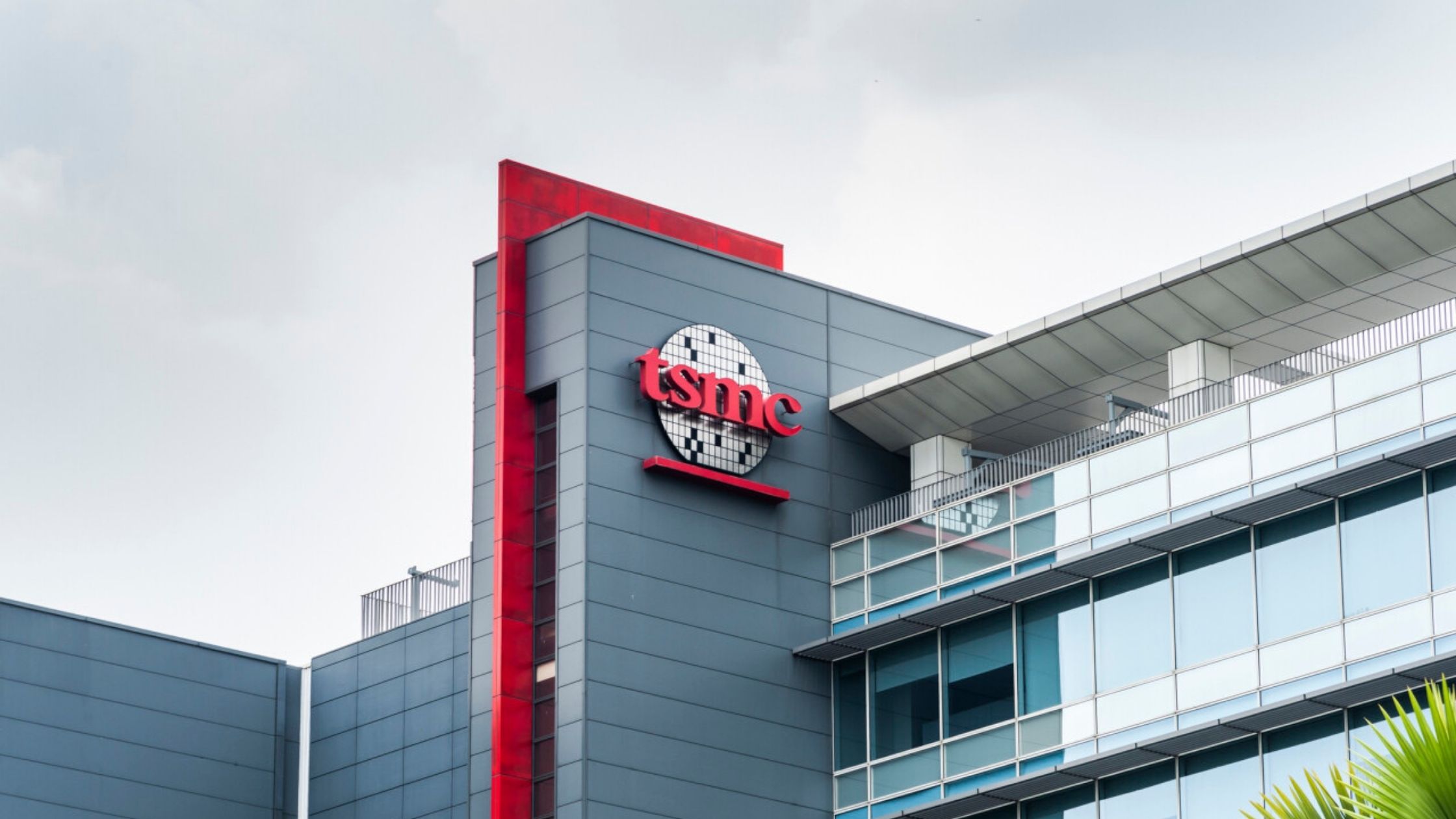
TIPO Announces Updates to the Trademark Classification for Goods and Services The Taiwan Intellectual Property Office has made adjustments to the designated goods and services names in trademark applications in response to the latest (12th) edition of the Nice Classification list.  A total of 422 items have been added and 56 items have been deleted.  An additional 15 modifications have been made to class/subclass names or annotations, as well as 25 corrections.  The aforementioned changes took effect on January 1, 2024.  The list of designated goods/services categories and names will be updated on the online trademark filing system as well.  The official timeline of website updates will be published on the website of the TIPO Information Management Office.   Applicants wishing to use the fast-track mechanism on the online trademark filing system after January 1, 2024, will be able to download the latest updates.  This will ensure consistency between the designated goods/services names stated in the application and the content in the electronic filing system, avoiding discrepancies that could jeopardize eligibility for the fast-track mechanism, as well as associated fee reductions. Taiwan’s TSMC Top Applicant for Patents for Eighth Year Taiwan Semiconductor Manufacturing Co., the world’s largest contract chipmaker, applied for the most patents out of any Taiwanese entity last year for the 8th consecutive year, the Ministry of Economic Affairs announced in February.  TSMC filed 1,956 invention patent applications in 2023, which is the company’s most ever and 28% more than in 2022.  By being the largest patent applicant in Taiwan, it also drives the growth of upstream IC design and also downstream IC packaging and testing services.  The...
April 9, 2024
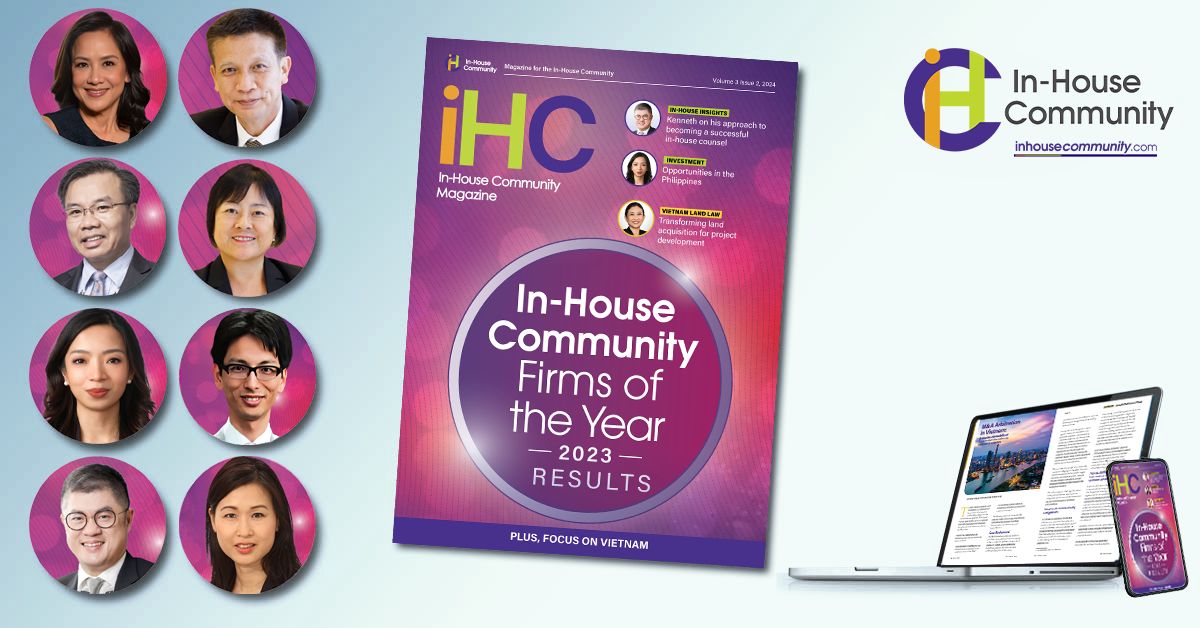
As we round off the first quarter of this year, we are proud to showcase our IHC Firms of the Year for 2023. These firms have been selected by our IHC community in recognition of their invaluable contribution to their clients’ businesses. This edition also shares the insights of our community on the latest trends in legal practice.
February 26, 2024
Taiwan and US Signs MOU on the Secure Exchange of Patent Data On November 22, 2023, Taiwan and the US signed the MOU on the Secure Exchange of Patent Data, streamlining and reducing the cost of patent priority claims for Taiwanese applicants who annually file over 20,000 patent applications in the United States.  The annual number of patent applications filed by Taiwanese has consistently been around 20,000 in recent years, but rose 6% from 2021 to 2022.  The MOU aims to alleviate this burden by facilitating the secure exchange of priority documents between the Taiwan Intellectual Property Office (TIPO) and the United States Patent and Trademark Office (USPTO).  The collaboration between Taiwan and the US on the electronic exchange of priority documents began in 2016 through TIPO and USPTO’s bilateral discussions.  Given the importance of information security, both confirmed details related to information equipment and transmission meticulously.  After continuous efforts from both sides, the MOU was finally signed in November 2023.  This milestone in the deepening of Taiwan’s relations with the US follows the implementation of the Patent Prosecution Highway (PPH) project in 2011, and the signing of the MOU on Intellectual Property Rights Enforcement Cooperation in 2017.  To create an environment conducive to international patent applicants, TIPO has launched the electronic priority document exchange (PDX) program with Japan and South Korea in 2019 and 2021 respectively.  The recent expansion in PDX collaboration with the US shall greatly increase the convenience of Taiwanese applicants filing patent applications in the US, as well as for US applicants filing in Taiwan – a mutually beneficial arrangement.  Following the signing, TIPO and...
1win.br.com
22warriors.org
dharanisugars.in
langladehistory.com
1win online
пин ап
ап х
aviator-bet.co.ke
bsl.community
entriforccm.eu
minnaz.ru