prockomi.ru
profobr27.ru
provegas.ru
thestudyofvalue.org
пин ап
pinco casino
ocphlab.com
tributementorship.com
July 9, 2021
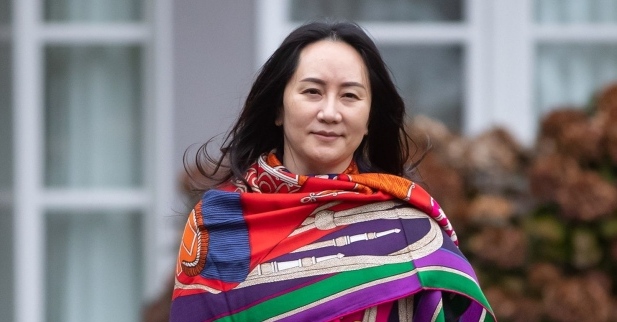
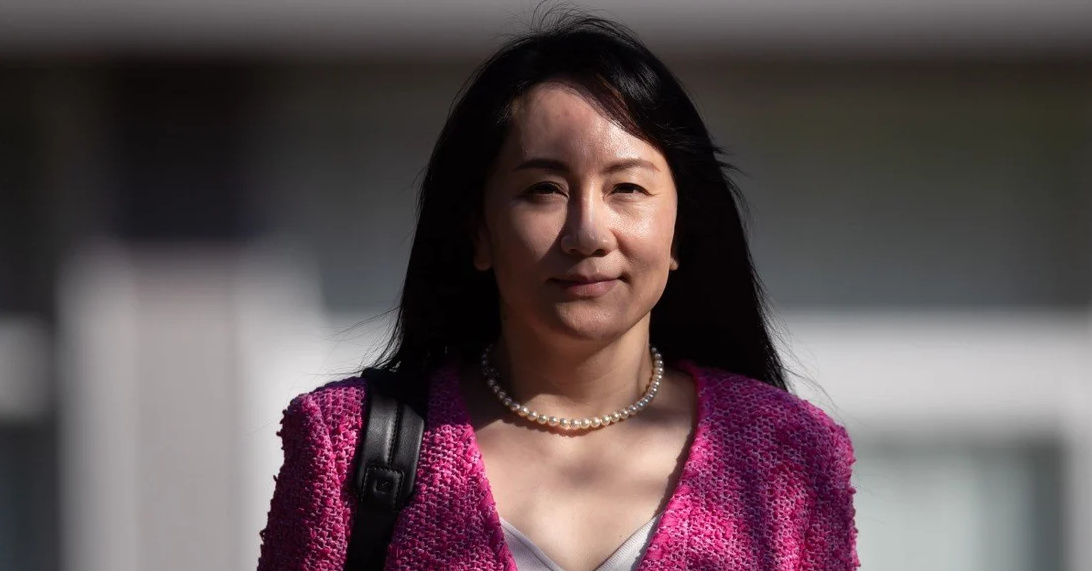
Canadians awoke again last week to headlines about the case of Meng Wanzhou, Huawei’s CFO. Since Meng’s arrest in December 2018, the case has been in and out of court. Many people have followed its progress, but others will have lost track of what it is about or think it doesn’t concern them. The highly distressing discoveries of unmarked graves in former residential schools in recent months has rightly led to national introspection and a collective demand for explanations and answers. The Canadian instinct towards equality and fairness will not rest until these are provided. Canadian values are fundamental, intensely felt and fiercely guarded. These two cases are not comparable in scale, but they both lead Canadians to ask what values are important to them, what they stand for, and what happens when those values are challenged. Meng’s case is simple, despite the impression given by any attempt to follow the arguments and applications being made. The lawyers’ skirmishes involve applications made in satellite cases in England and Hong Kong, witnesses relocating to Macau, allegations against HSBC in South America, business dealings in Iran and allegations of fraud in the United States. Add to this the wealthy individuals involved, multinational companies, media hype and sound bites from Donald Trump, and links to accusations against the two Michaels held in China and we have good ingredients for making a James Bond Movie. In short, Meng is accused of concealing from HSBC in 2013 that Huawei controlled a company doing business in Iran. The United States wants Canada to send Meng there to be tried. In Canada, the case is all...

July 7, 2021
Beijing Raises the Stakes with New Anti-Sanctions Law, But Can China’s Counter-measures Succeed Where the EU and Others Have Failed?   Wednesday, 7th July 2021. This is the second in a series In 2016, Jack Lew, then serving as US Treasury Secretary, gave a speech in which he discussed the history and evolution of sanctions.  After describing the US leadership position in the global financial system as the source of the power of US sanctions, he then issued this warning: The US “must be conscious of the risk that overuse of sanctions could undermine our leadership position within the global economy, and the effectiveness of our sanctions themselves.” He went on to identify several potential costs of overuse of sanctions generally and secondary sanctions specifically:  Such measures, Secretary Lew said, can strain diplomatic relations, destabilize elements of the global economy, impose real costs on companies in the US and abroad, and perhaps most importantly, they carry a “risk of retaliation.” [1] China Enters (and Escalates) the Sanctions Battle With the adoption of its new Anti-Sanctions Law by the National People’s Congress Standing Committee (NPCSC) on June 10, China has demonstrated that it is fully prepared to retaliate against what it perceives as US sanctions overreach, confirming the prescience of Secretary Lew’s warning. NPCSC Chairman Li Zhanshu is reported to have told lawmakers that the new law shows that China will never relinquish its legitimate rights and interests.  “The Chinese government and people will resolutely counter various sanctions and interference,” he said.[2]  A Hong Kong-based legal scholar was even more direct, noting, “Cooperation is the best option but the U.S....
July 5, 2021
Written by: Alexander H. E. Morawa, S.J.D.[1] As the extradition case of Ms. Meng grinds through the Canadian judicial system, it may be worthwhile to contemplate certain aspects of international law that may be relevant if the matter progresses further. In particular, not only general public international law, but international human rights law governs certain aspects of extraditions. This article addresses several pertinent questions. International Human Rights Law Governing Canada and the USA As regards universal human rights law, Canada has ratified the UN Covenant on Civil and Political Rights (CCPR) and accepted the competence of the UN Human Rights Committee to consider communications of victims alleging violations of their rights. Canada has also ratified the UN Convention against Torture (CAT), which offers a similar complaints procedure to a specialized committee. On the regional plane, unlike the United States, which signed the American Convention on Human Rights in 1977 but never ratified it, Canada has neither signed nor ratified it.[2] Nevertheless, as member states of the Organization of American States (OAS), both are bound by the American Declaration of Human Rights and subject to the Inter-American Commission’s review of complaints alleging violations of the Declaration which “became a source of legal obligation … to Canada when it became a Member State of the Organization of American States (OAS) and … based on Article 20 of the Statute, and the Rules of Procedure of the Inter-American Commission” (Manickavasagam Suresh v. Canada (2016), para. 49).[3] US and Canadian cases cannot, however, proceed to the Inter-American Court of Human Rights, although the Convention will be “relevant in informing an interpretation of the...
July 2, 2021
The US Currently Occupies a Position of Extraordinary Asymmetrical Leverage, But Its Unilateral Approach Entails Broader Geopolitical Risk   Friday, 2nd July 2021. The first in a series As the world’s leading superpower, the US may have unmatched military strength, but in recent decades the US has preferred to weaponize economic sanctions as its instrument of choice to project power and influence around the globe. Economic boycotts, blockades and other trade sanctions have a long history dating back millennia.  Sanctions became a more prominent tool of economic statecraft in the second half of the 20th century as the US and other Western countries saw financial and trade pressures as preferable to warfare as a means to enforce the new post-war global order, allowing countries in a position of economic power to achieve many of the same geopolitical ends without having to put boots on the ground and troops in harm’s way. Sanctions may be imposed on a multilateral or unilateral basis, but the US is the single indispensable player in the global sanctions game, with the most expansive sanctions coverage and the most aggressive and effective enforcement capability.  Without the US, multilateral sanctions have no real teeth, and acting alone the US can still effectively impose its will on companies and individuals around the world to compel them to play by its rules. The power of US sanctions arises from the confluence of US dominance in terms of undisputed military, economic and technological leadership in a world which is globally-interconnected to an unprecedented degree.  The centrality of the US role in the international order, and more particularly the dominance...
June 25, 2021
Ms Wanzhou Meng, the CFO of China’s telecom giant Huawei, has been fighting in Canadian courts against her extradition to the US since the end of 2018. Her legal team presented a fourth set of legal arguments in late March and early April to the Canadian Supreme Court. The lawyers sought to argue that the US cannot prosecute Ms Meng in this case as the US courts have no jurisdiction in the circumstances. US prosecution, they say, would violate the requirement of customary intentional law on jurisdiction in criminal cases. The final decision in the extradition case was recently delayed when the Canadian court allowed Ms Meng’s lawyers to review new documents after HSBC and Huawei settled in Hong Kong. The final decision should be handed down this summer. Ms Meng was arrested in December 2018 at Vancouver International Airport where she was transiting on her way to Mexico. The arrest was in response to the US extradition request: Ms Meng faces charges of bank fraud for misleading HSBC about Huawei’s business dealings in Iran – an act which would have put the bank in breach of the US sanctions against Iran. Ms Meng has been held under house arrest in Canada since then, maintaining her innocence and fighting for her release. Ms Meng’s lawyers have previously argued that the fraud allegations are unsubstantiated and false, and that Ms Meng is a victim of abuse of due process. The lawyers argued that there were irregularities in Ms Meng’s arrest and they sought to show that the restrictions on Huawei and Ms Meng’s arrest need to be understood in their...
June 22, 2021
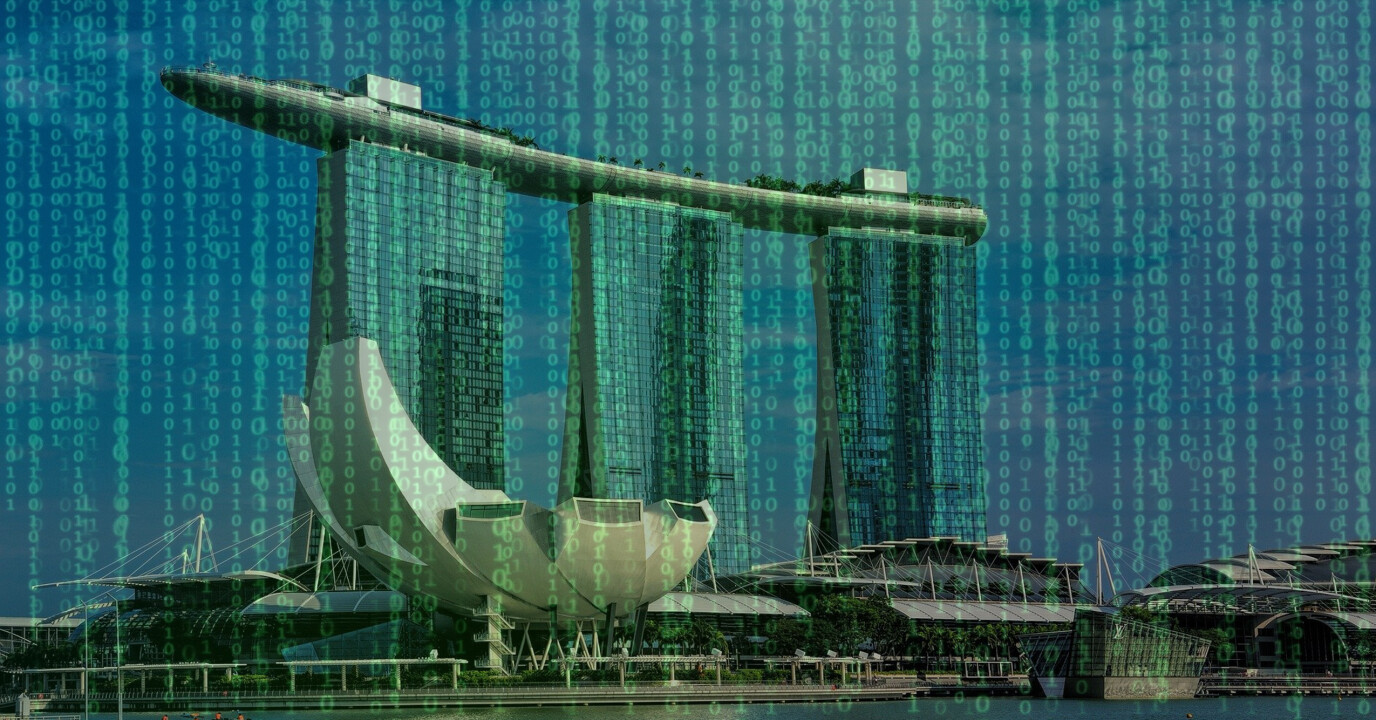
As data grows in value and importance, the phrase “data is the new gold” is now heard regularly in the corporate world. With 5G mobile networks and the internet of things (IoT), more data than ever is being mined and Singapore is in the prime regional position to store this new “gold.” In its 2019 and 2020 reports3, the consultancy Cushman & Wakefield ranked Singapore’s data center capabilities as sixth worldwide and first in Asia-Pacific market, which is “forecast to reach US$28 billion by 2024, 20% higher than the US$23.4 billion North American market.” The reports reasoned that data center players will “favor Singapore for its relative security to store mission critical data and the business-as-usual data in the neighboring countries.” Cybersecurity Laws In A Nutshell Singapore has adopted a framework of key legislation and sector-specific regulations to address cybersecurity issues. The Cybersecurity Act 2018 moved Singapore away from sector-based regulation and required cybersecurity service providers to gain a license. It empowered the Commissioner of Cybersecurity, amongst others, to establish mandatory codes of practice and reporting/auditing requirements for owners of critical information infrastructure (CII). A non-owner of CII has an obligation to cooperate in cybersecurity investigations by the commissioner. The Act is linked to the Computer Misuse Act which criminalizes cybersecurity offences such as unauthorized access to computers. The Personal Data Protection Act 2012 (PDPA) also requires organizations to implement security measures to prevent unauthorized access, collection, use or disclosure of personal data. At the same time, sector-specific regulations continue in force. For example, the Monetary Authority of Singapore publishes notices and guidelines on cybersecurity best-practice for the banking...
1win.br.com
22warriors.org
dharanisugars.in
langladehistory.com
1win online
пин ап
ап х
aviator-bet.co.ke
bsl.community
entriforccm.eu
minnaz.ru